

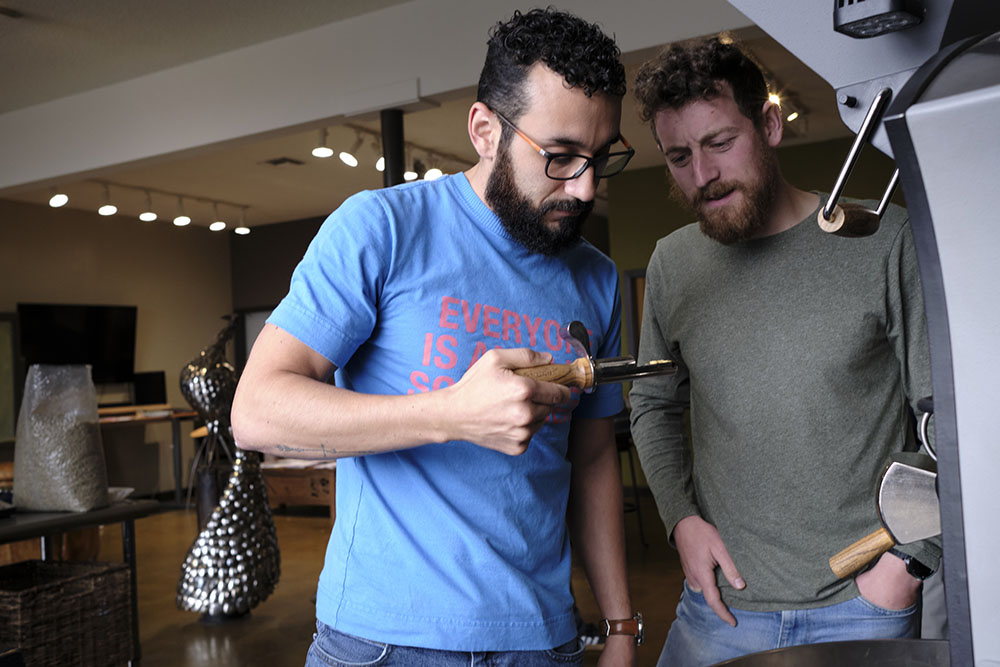
SCA Roasting Foundation: One-Day Coffee Roasting Course
Learn the basics of coffee roasting through hands-on roasting, tasting, and an introduction to the equipment. This one-day SCA Roasting Foundation course is for beginners, coffee professionals curious about roasting, and anyone considering roasting their own coffee.
Roast your first batches
Charge the coffee, watch the colour change, listen for first crack, and decide when to drop the batch. You’ll try different roasting machines and record the milestones of your first roasts, learning what the controls do as you use them.
We’ll explain how heat reaches the beans and what happens as green coffee loses weight, expands, and develops its aroma. You’ll start reading roast profiles and understanding the difference between roast degree, how light or dark the coffee is, and the profile used to get there.
Taste how roasting changes coffee
You’ll taste different roast levels and compare their acidity, body, bitterness, and flavour. Connecting those differences to the roasting process gives you a useful starting point for deciding how you want your own coffee to taste.
We also cover safe operation, cleaning, and the everyday maintenance routines that belong in a roasting day.
You’ll leave having roasted coffee yourself, recorded what happened, and tasted the results.
Planning to start a coffee roasting business?
If you want lots of roasting practice and are preparing to open a business, we highly recommend our Start a Coffee Roasting Business course, especially if SCA certification isn’t your main goal.
SCA Roasting Intermediate: Three-Day Coffee Roasting Course
Learn to control your roast, repeat your results, and understand how your decisions affect flavour. This three-day SCA Roasting Intermediate course combines roasting exercises, coffee measurements, and tasting, with both practical and theory exams.
Can you repeat a good roast?
You’ll create a reference roast, record its measurements, and aim to match its colour in two more batches. Using a colour meter and tracking weight loss, density, and volume helps you judge consistency with more than a final temperature.
This exercise gives you a practical way to check your work and identify what needs adjusting in the next batch.
Connect roast profiles with flavor
If two coffees finish at the same colour, will they taste the same? You’ll compare coffees with different development times and explore how roasting choices affect fruitiness, acidity, chocolate, caramel, and nutty flavours.
You’ll also learn to read rate of rise, the speed at which bean temperature changes, and use it to understand how your roast is progressing.
Before each roast, we’ll look at the variables that influence your approach. How should moisture and density affect heat application? Why might the first batch of the day behave differently from later batches? These questions help you make better decisions when the coffee or roasting conditions change.
Evaluate green coffee through sample roasting
You’ll learn how consistent sample roasting helps you compare supplier samples and assess coffee before buying. We cover sample records, preparation, and the roasting protocols that make comparisons more useful.
Practical training and exams
Intermediate includes hands-on roasting exercises and a practical exam, alongside the theory assessment. You’ll practise recording your roasts, measuring the results, and repeating a target roast.
You can book Foundation + Intermediate, or sign up for all three SCA Roasting levels together and complete them in order.
SCA Roasting Professional: Three-Day Advanced Coffee Roasting Course
Refine your roast profiles, investigate quality problems, and understand the production decisions behind your coffee. This four-day SCA Roasting Professional course combines advanced roasting theory with practical exercises, sensory evaluation, and roastery cost calculations.
You’ll need to pass Intermediate before attending Professional.
Understand what to change in your next roast
A roast curve can look good while the coffee tastes flat. You’ll examine how bean size, moisture, and density affect roasting, then study what happens inside the bean as water evaporates, pressure builds, and its structure changes.
We connect roasting chemistry with the cup: how Maillard reactions, caramelisation, and changes in coffee acids influence aroma, acidity, bitterness, body, and extraction. The purpose is to help you understand your results and make more informed adjustments.
Identify roast defects through tasting and measurement
You’ll use cupping and sensory comparison tests to investigate differences between coffees, including underdeveloped and baked flavours.
We also examine physical defects such as tipping and scorching. Roast records, colour measurements, and sensory evaluation help you assess what happened and decide what to try next.
Build blends with a clear purpose
Should you blend before or after roasting? How many components make sense? What happens when one coffee becomes unavailable?
You’ll explore blending decisions for espresso, milk drinks, customer requirements, and target prices. We’ll consider both the flavour you want and the work involved in producing it consistently.
Calculate costs and realistic roasting capacity
You’ll work through production costs using green coffee prices, roast weight loss, packaging, and other expenses. These exercises help you understand what your coffee costs to produce and how that affects your margins.
You’ll also calculate realistic roaster capacity, accounting for batch sizes, warm-up, cooling, and the working day. That matters when choosing equipment or deciding whether your current machine can meet demand.
Practical training, exams, and booking
Professional includes practical roasting, measurement, and sensory exercises, with a practical exam alongside the theory assessment.
You can sign up for Foundation + Intermediate + Professional together and complete them in order. Passing Intermediate is a very achievable step with preparation and practice, and its exercises provide a useful basis for Professional.

